Demos
Products I've built, shown working.
Short walkthroughs of real software I designed and built, with notes on the problem, the product, and the decisions behind it.
Find the owner-operated companies worth calling.
A sourcing tool for finding privately held trades businesses like plumbing and HVAC shops, along with who owns each one and roughly how many people work there.
Visit Vexis ↗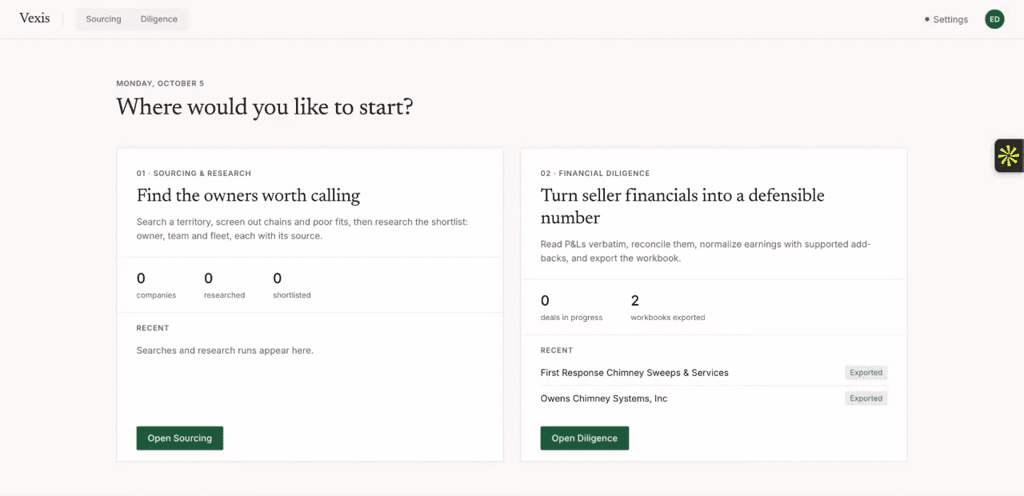
- The problem
- Owner names and company size are the two things you need first when sourcing lower-market trades businesses like plumbing and HVAC, and they're the hardest to find. Most of these companies are privately held and family-run, so the usual databases either miss them or get the details wrong.
- What it does
- The agent queries the Google Maps Places API to discover companies in a target area and ranks them by Google review count as a first proxy for size. A crawler goes through each company's website looking for the owner's name and falls back to sources like the BBB when the site doesn't list one. A vision agent then looks for a team page or a crew photo and estimates headcount from what it finds. You get the owner and a headcount estimate for every company in one list.
- Worth noticing
- The headcount method comes from how these businesses present themselves online. Trades crews like to pose for a photo in front of the shop, and that photo ends up on the website, so the vision agent counts the faces in it whenever there's no team page to work from. Review count does a similar job at the ranking stage, since a shop with 800 reviews is almost always bigger than one with 40.
Turn a stack of P&Ls into a quality of earnings you can defend.
Upload a target's statements and tax returns. Vexis maps every account, reconciles the years against each other, and builds the QoE with a source behind each figure.
Visit Vexis ↗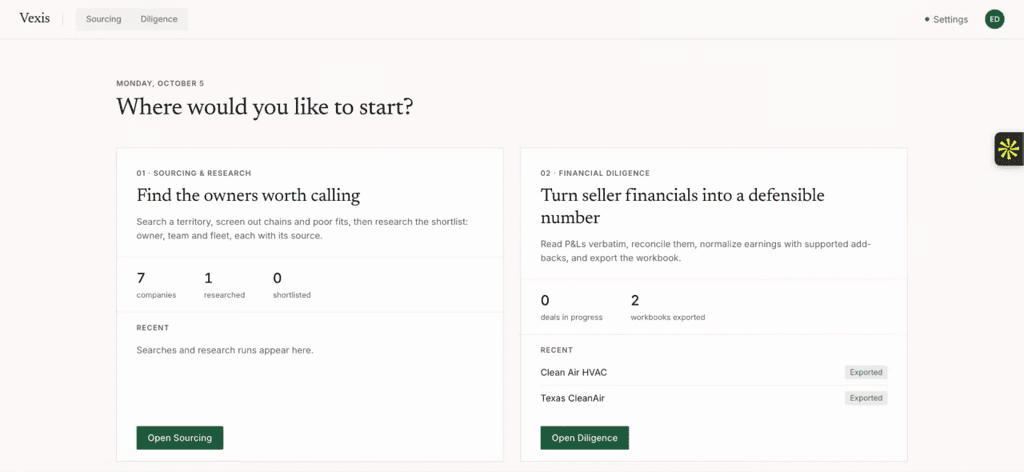
- The problem
- Small/medium-business financials arrive as scanned P&Ls, tax returns, and spreadsheets that often don't tie out.
- What it does
- Reads every statement verbatim, maps accounts to a standard chart, reconciles the years against the returns, and proposes add-backs with the evidence attached.
- Worth noticing
- Every figure in the workbook links back to the page it came from.
- Discrepancies are flagged, never silently smoothed over.
- The export is a real Excel model with live formulas, not a static PDF.
Reference checks that actually happen.
An AI voice agent that runs reference checks end to end for staffing agencies, from reaching out to each reference through to a report for the hiring manager.
Visit RefCheck ↗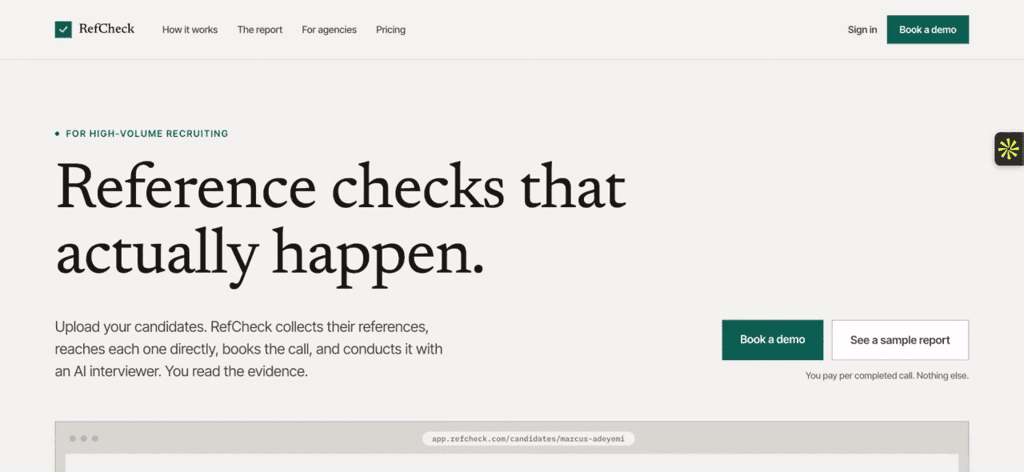
- The problem
- High-velocity staffing agencies rarely have the bandwidth to call references on every candidate, even though the clients who retain them usually want it done. Reference calls take time to schedule and more time to write up, so they get skipped when the pipeline is full.
- What it does
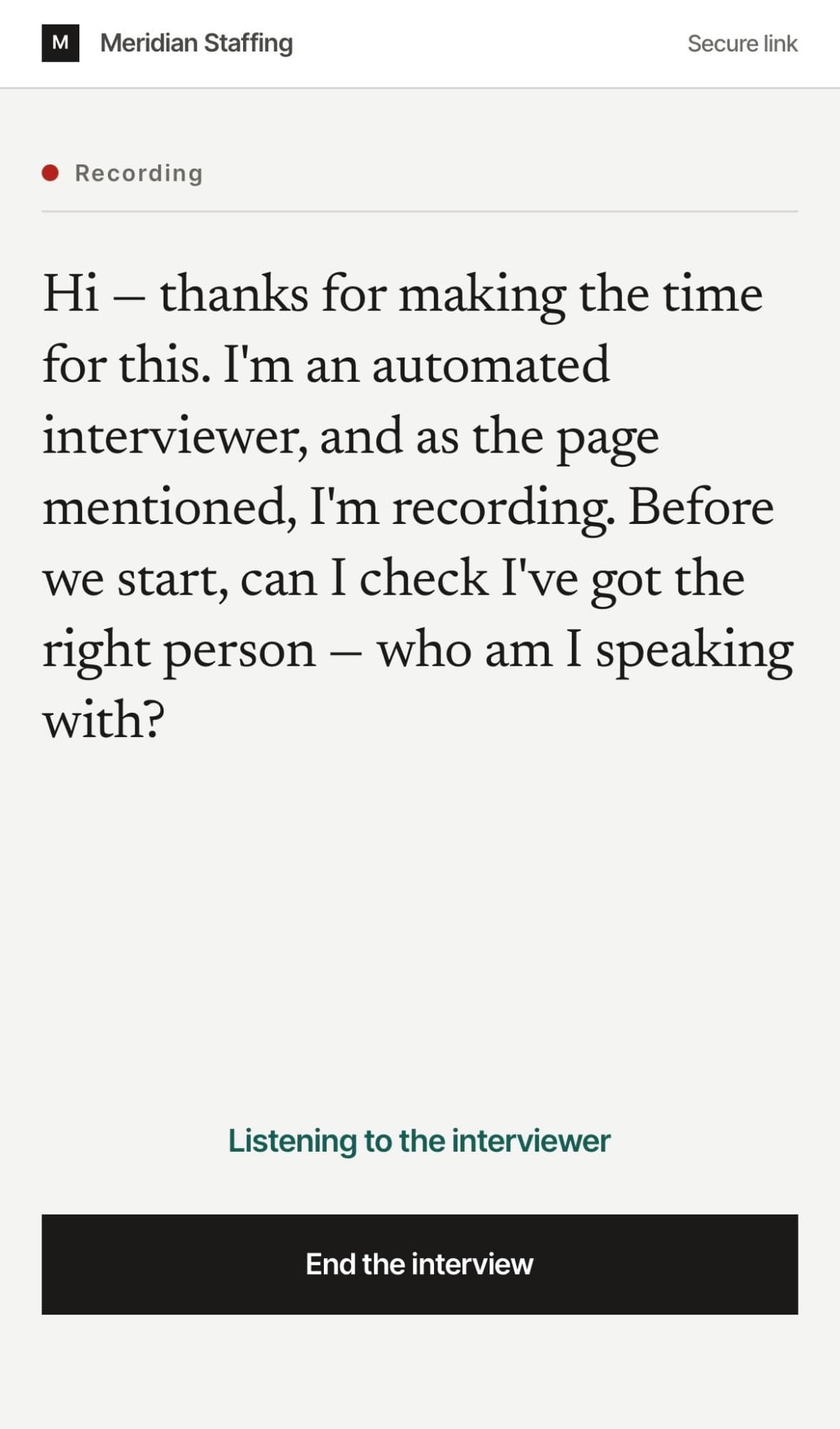
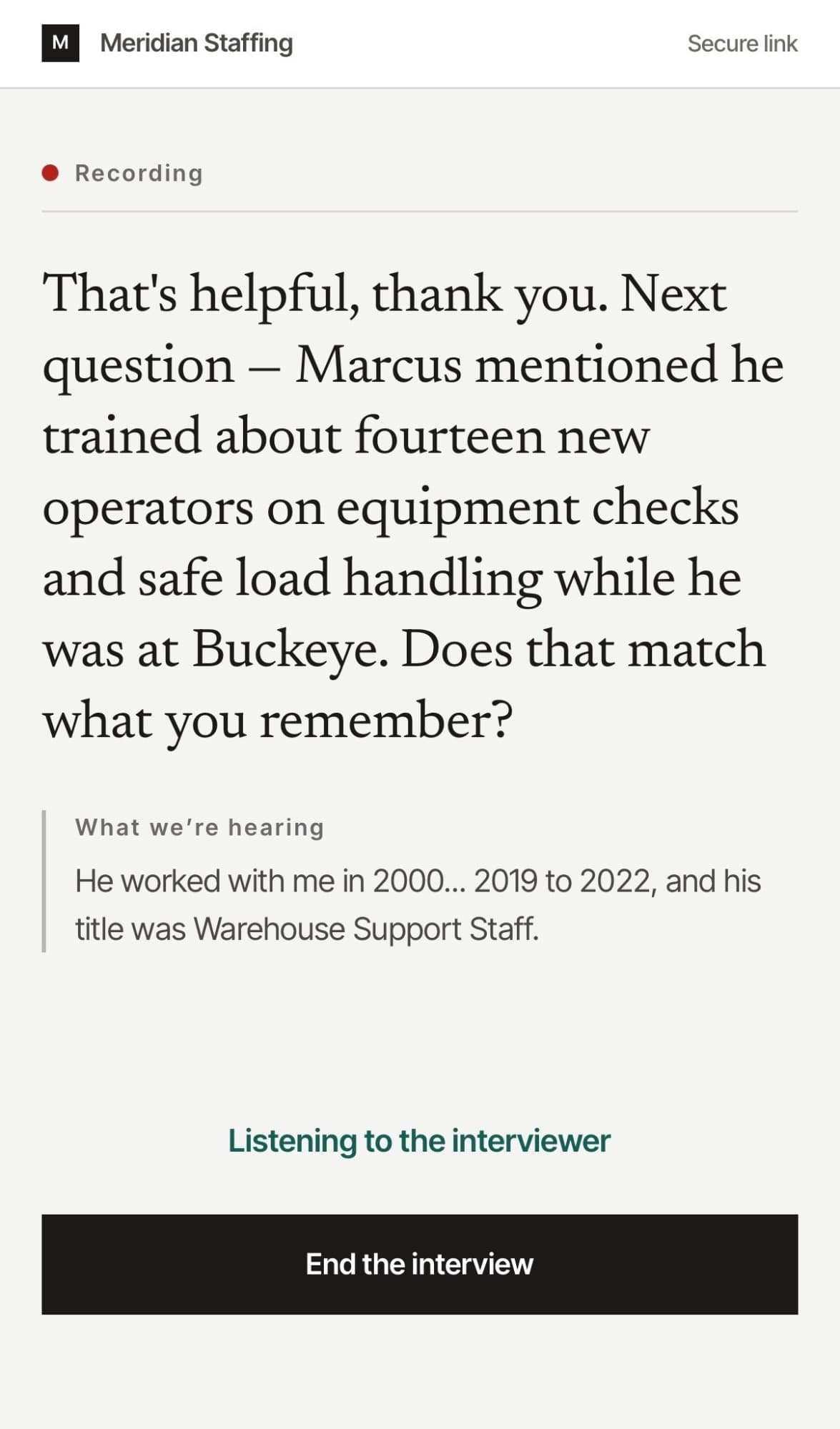
- Candidates submit references from their former roles, and Refcheck reaches out to each one. A reference can book a time for the AI voice agent to call them or take the call live on the spot. The agent reads the candidate's resume beforehand and uses it to ask questions that confirm and clarify specific claims. Afterward the hiring manager gets a report with any discrepancies flagged, plus recordings and transcripts of each call to play back and review.
- Worth noticing
- The questions come from the resume itself, so each call is built around what that particular candidate claimed about a given role. A reference who says the candidate managed two people when the resume says eight shows up as a flag in the report. The live option matters too, since a reference can finish the call the moment they open the message and skip the back and forth of scheduling entirely.
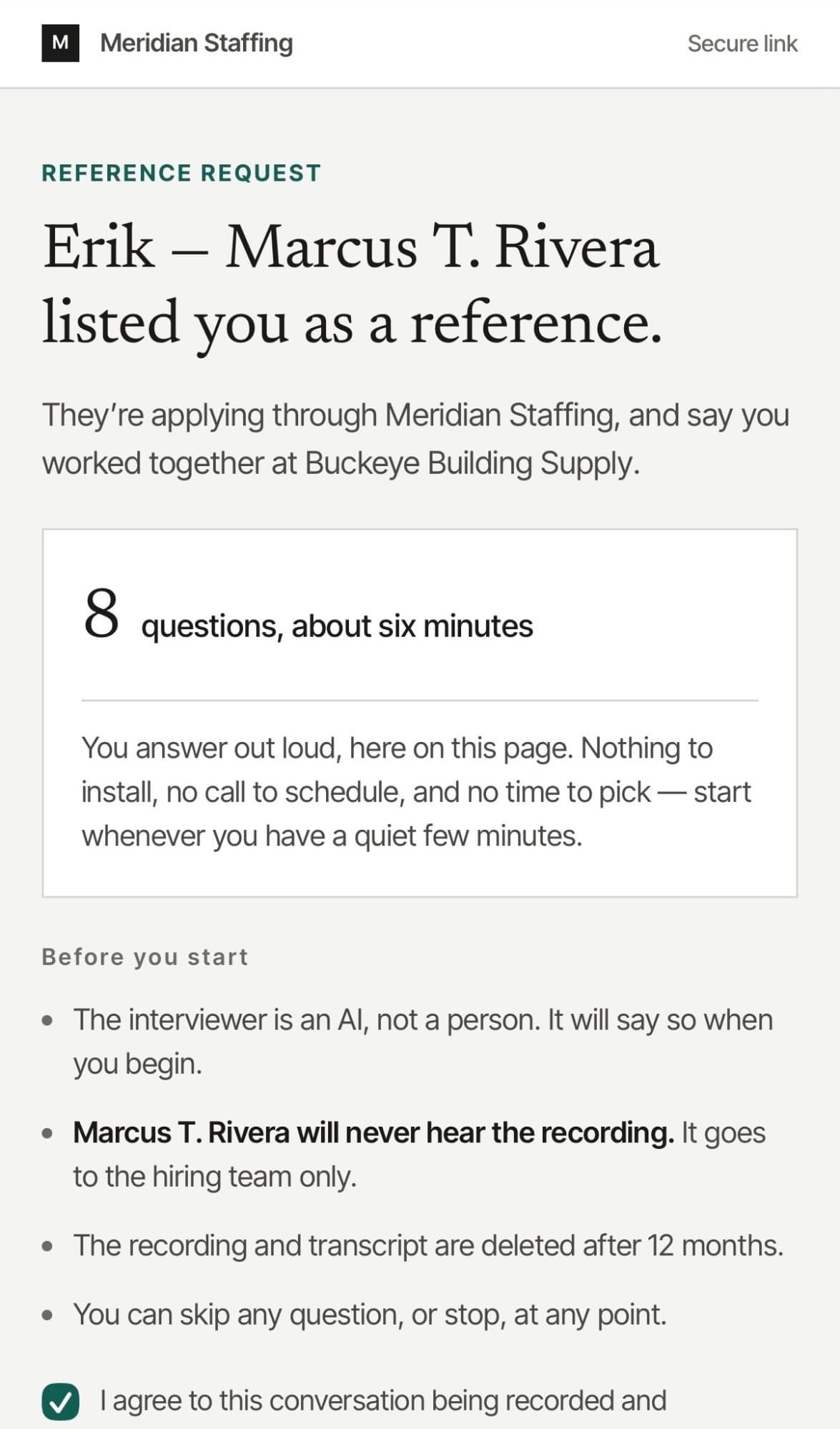
On the reference's phone
No app and no scheduled call. The reference opens a link and answers out loud, whenever they have six quiet minutes.
A second brain for field sales.
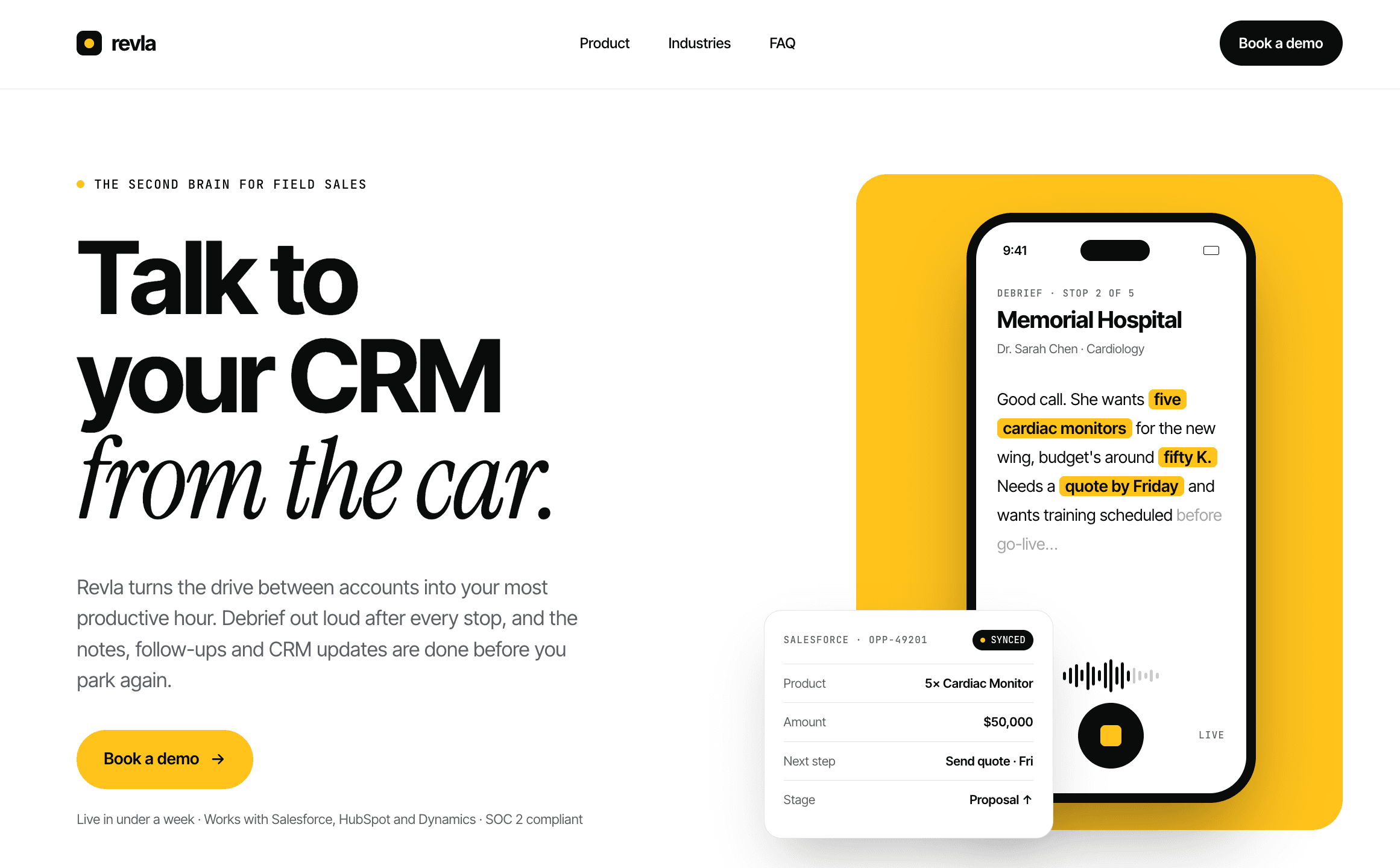
A voice-first assistant for field sales reps that turns a spoken debrief in the car into CRM updates, follow-ups and quote requests before the next stop.
Visit Revla ↗- The problem
- Field reps spend the day driving between accounts, so the admin piles up until evening. CRM entries get done at the kitchen table at 9 pm, if they get done at all. Notes end up as three words nobody else can read, follow-ups slip, and managers end up forecasting off a pipeline that's days behind what happened in the room.
- What it does
- After a visit, the rep talks through it out loud the way they'd tell their manager, with no commands or field names. Revla pulls out what matters and files each piece where it belongs. A single debrief can move an opportunity to a new stage with the right amount, draft a quote and route it to the deal desk, write a recap email in Outlook for the rep to review, and add a new contact with a task attached. Before a visit, it reads account history so the rep pulls into the lot already knowing what happened last time. It can also record in-person meetings, separate the rep's voice from the customer's, and catch verbal commitments like a price threshold or a close date. Revla connects to Salesforce, HubSpot, Dynamics 365 and Veeva, along with email and ERPs like SAP and NetSuite.
- Worth noticing
- The rep never touches a form. Everything starts from unstructured speech, and Revla does the work of mapping a rambling parking-lot recap onto the right records across several systems, with validated writes back into the CRM. Speaker separation in live meetings means a customer saying "if the base is under $5K, we can sign this week" gets logged as a commitment with a close date attached. None of this requires changes to the CRM's fields or the team's sales process, which is why most teams go live within a week.
Get in touch